Removing Buckthorn
the natural way.
This aggressive European invasive transforms diverse woodlands into barren thickets, but understanding how buckthorn spreads reveals how to defeat it naturally.
Buckthorn: A Threat to Natural Ecosystems Across Minnesota, Wisconsin, and Iowa
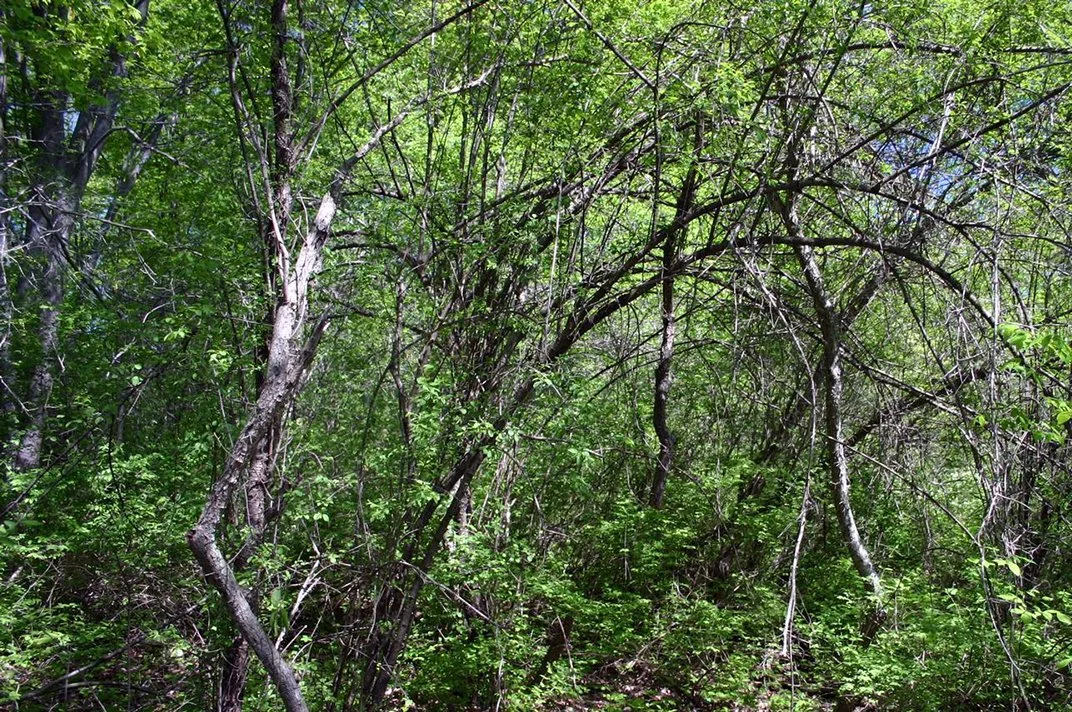
Walk through almost any woodland in Minnesota, Wisconsin, or Iowa, and you'll likely encounter dense thickets of glossy, dark-leaved shrubs crowding out everything else. This is buckthorn—an aggressive European invasive that has fundamentally altered Midwest ecosystems over the past century.
Buckthorn thrives in the absence of natural grazers. When large herbivores disappeared from our prairies and savannas, buckthorn filled the ecological void. Its dense canopy shades out native prairie plants and woodland wildflowers. The thick understory it creates eliminates habitat for ground-nesting birds and prevents oak seedlings from establishing. Where buckthorn dominates, biodiversity collapses.
How to Identify Buckthorn
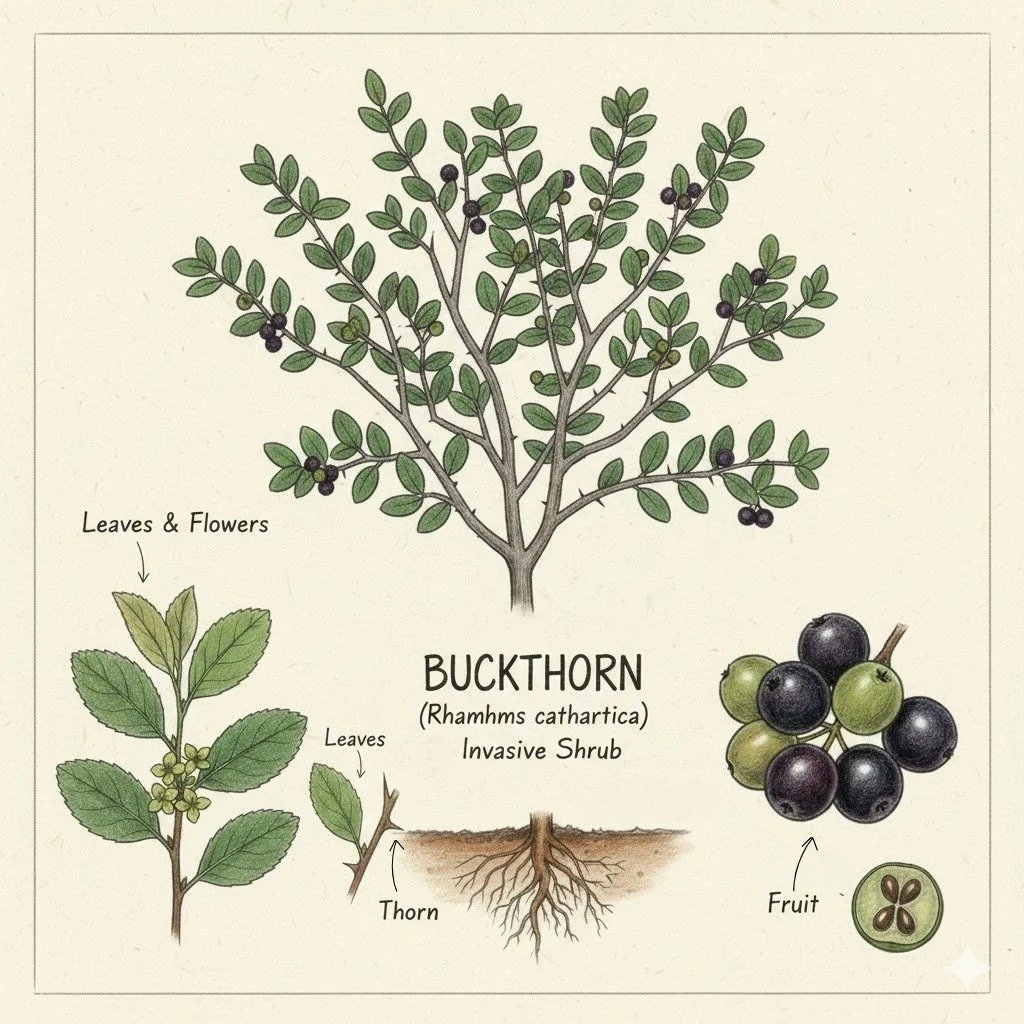
Buckthorn is easiest to spot in late fall when its dark, glossy leaves remain stubbornly green after native trees have dropped their foliage. Common buckthorn grows as a tall shrub or small tree with gray-brown bark marked by elongated silvery spots. Its leaves are oval with small teeth along the edges and three to five distinctive curved veins running from stem to tip. Twigs often end in short, sharp thorns. If you cut a stem, you'll see bright orange heartwood surrounded by yellow sapwood—a telltale sign. In late summer and fall, female plants produce clusters of black berries that birds eagerly consume and spread. Buckthorn typically forms dense, multi-stemmed thickets that create deep shade and crowd out all other vegetation, making woodland floors dark and barren where diverse plant communities once thrived.
Why the traditional approach to Buckthorn control doesn't work
The traditional approach to buckthorn control—cutting stems and treating stumps with herbicide—is labor-intensive and often produces variable results. Eight hours of manual work might clear only five percent of an acre. For landowners facing dozens or hundreds of buckthorn-invaded acres, the task feels impossible.
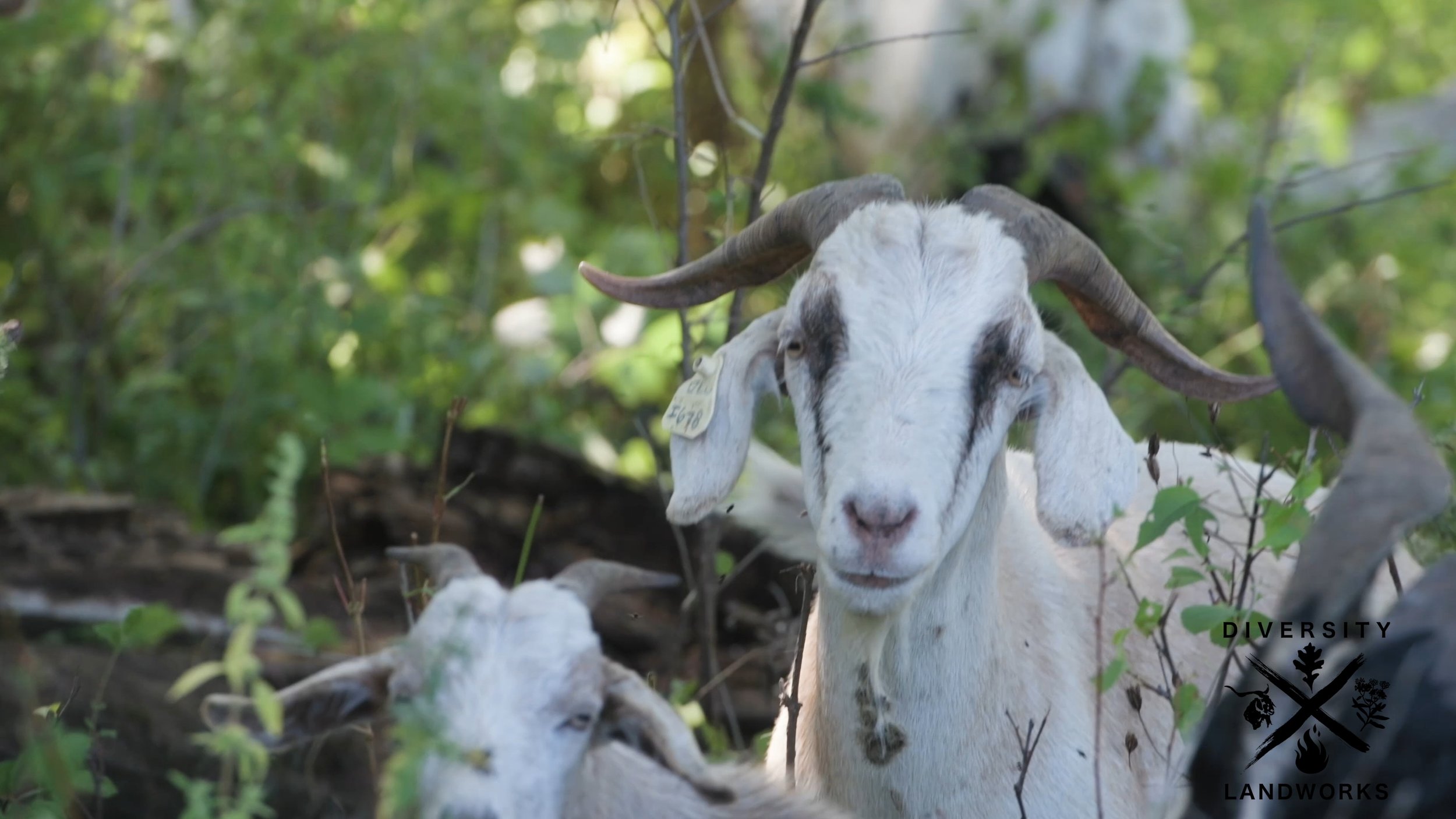
This is where prescribed goat grazing offers a breakthrough. Goats preferentially browse buckthorn, eating leaves from the top down. This forces the plant to draw on root carbohydrate reserves to produce new growth. With repeated grazing over multiple seasons, those reserves become depleted and the plant's vigor collapses. Eventually, after several grazing cycles, the buckthorn dies.
How Diversity Landworks Gets rid of Buckthorn…the effective, natural way
Our standard prescription involves grazing events twice per year for three years, applying sustained pressure that buckthorn cannot withstand. Summer browsing removes leaves and forces energy depletion. Winter grazing proves especially devastating—our goats strip bark from stems, and buckthorn plants fifteen to twenty years old can die in a single winter season from this bark damage.
The progression is visible and measurable. After the first one or two grazing sessions, you'll see stems stripped of leaves—what we call "blind wood"—indicating the plant lacks carbohydrate reserves to refoliate. After three or four grazing cycles, the transformation is dramatic: dead buckthorn stems stand amid open ground, sunlight reaches the forest floor again, and native sedges and wildflowers begin returning naturally.
With over 1,200 goats harvesting millions of pounds of biomass annually, we can work at the scale this regional crisis demands. Our goats work year-round, unlike herbicide applications or prescribed burns that require specific seasonal windows. Best of all, goats naturally avoid oaks, walnuts, and hickories—allowing us to selectively eliminate buckthorn while protecting the native trees that support hundreds of species.
The transformation requires patience. Landscapes that degraded over a century won't restore overnight. But our approach does more than address the aesthetic problem—it harvests biomass, changes soil conditions, and restores ecological function. Give it three to five years of prescribed grazing, and you'll see your land return to the diverse, resilient woodland it was meant to be.
Watch how prescribed goat grazing transforms invaded landscapes
This video features an animated explanation of how goats deplete invasive plants' root reserves through repeated browsing, plus real footage from Minneapolis Park Board's Eloise Butler Flower Garden showing side-by-side comparisons of ungrazed areas choked with buckthorn versus lands grazed multiple seasons where native plants are returning and light reaches the forest floor again. Diversity Landworks co-founder Kyle Johnson gave this presentation at the Regenerative Livestock Symposium at the University of Minnesota in Saint Paul, Minnesota, in June 2024.
Contact Us
Ready to begin a conversation? Provide some basic information by filling out a short form, or if you prefer, you can contact us by email or phone. Please allow up to one business day for us to respond.
507-556-4420