How Minnesota pioneered prescribed grazing to defeat buckthorn
Watch Kyle Johnson's 2024 presentation at the University of Minnesota about Diversity Landworks, prescribed grazing and becoming Minnesota’s first professional prescribed grazing practitioners.
In June 2024, Kyle Johnson was selected to present at the Sustainable Animal Agriculture symposium in Saint Paul, Minnesota. His presentation, "Prescribed Goat Browsing in Afforested Lands," shared a decade of experience developing innovative restoration techniques for degraded Midwest ecosystems.
From Prairie Kid to Rx Pioneer
Kyle's journey began far from the symposium stage—as a ten-year-old burning prairies and planting oaks on his family's Iowa land while other kids attended soccer practice. His presentation traces how those early experiences led to a frustrating realization: traditional buckthorn removal methods couldn't address ecological degradation at the scale our landscapes required.
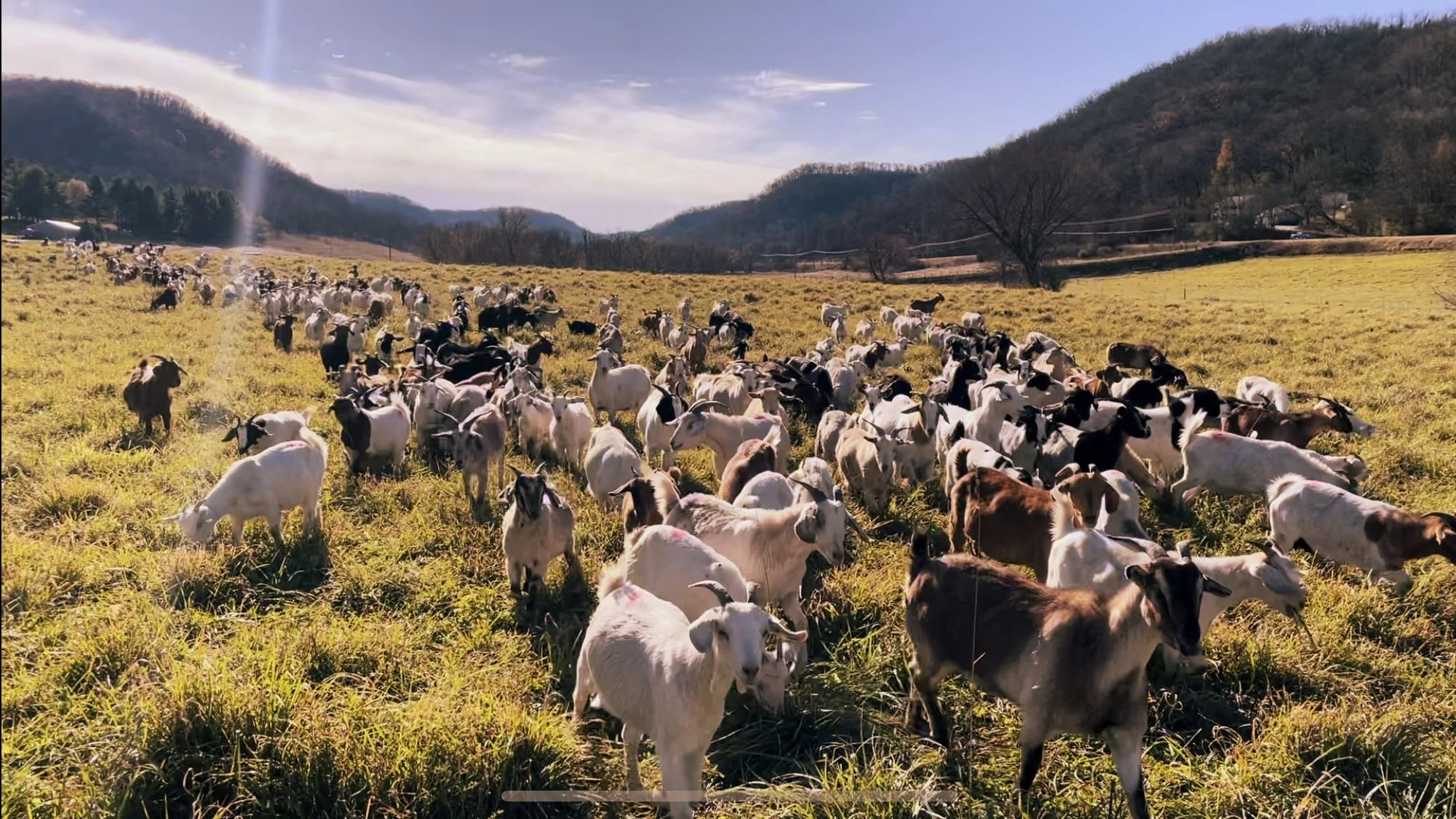
The answer came in 2013 when Kyle and co-founder Tim Taylor started experimenting with twenty goats. What began as a "left-field idea" became Minnesota's first prescribed goat browsing operation and evolved into comprehensive best management practices now recognized by agencies throughout the region.
Why Goats Work When Other Methods Fall Short
In his talk, Kyle explains the biological mechanism behind prescribed grazing—how repeated defoliation depletes plants' root reserves over multiple seasons, eventually killing invasive species while native vegetation returns. He reveals why goats prove superior to sheep for this work, how they navigate terrain that defeats machinery and humans alike, and their remarkable ability to work year-round when other restoration methods face seasonal limitations.
Perhaps most fascinating: goats possess an almost magical selectivity, consuming buckthorn, honeysuckle, and wild parsnip while leaving oaks, walnuts, and hickories completely untouched.
Seeing the Transformation
The presentation includes compelling before-and-after footage from Minneapolis Park Board's Eloise Butler Flower Garden, showing side-by-side comparisons of impenetrable buckthorn thickets versus areas grazed multiple seasons where light now reaches the forest floor and native plants are returning. Kyle walks viewers through recognizing "blind wood"—buckthorn stems that lack the reserves to refoliate—and explains how to read the landscape's recovery.
Working at Scale
Kyle discusses how Diversity Landworks has grown from that initial herd of twenty goats to operating approximately 1,300 animals across 2,000 to 3,000 acres annually. The company now works throughout the Mississippi River corridor with agencies including the Minnesota DNR, Minneapolis Park Board, U.S. Fish and Wildlife Service, county organizations, tribal entities, and The Nature Conservancy.
He shares the standard prescription they've developed—browsing events twice per year for three years—and why this sustained pressure succeeds where single interventions fail. The talk also addresses a crucial mindset shift: letting go of America's demand for instant results and embracing restoration that honors nature's timeline.
An Adaptive Strategy for Complex Ecosystems
Throughout the presentation, Kyle emphasizes that prescribed grazing requires extraordinary adaptability. Every site differs. Every season brings new challenges. Success comes not from rigid protocols but from deep ecological understanding combined with decade of practical experience.
His presentation demonstrates how prescribed grazing fits within comprehensive restoration strategies alongside forestry mowing, grapple work, prescribed fire, and prairie management. The goal isn't just eliminating invasive species—it's creating functional landscapes full of biodiversity and resilience.
Watch the Full Presentation
Kyle's complete talk includes detailed explanations of browsing mechanics, implementation strategies, case study results, and the ecological principles underlying this restoration approach. Whether you're a landowner facing invasive species challenges, a land manager exploring alternative techniques, or someone interested in regenerative practices, this presentation offers valuable insights into biological land management at scale.
Watch how prescribed goat grazing transforms invaded landscapes
This video features an animated explanation of how goats deplete invasive plants' root reserves through repeated browsing, plus real footage from Minneapolis Park Board's Eloise Butler Flower Garden showing side-by-side comparisons of ungrazed areas choked with buckthorn versus lands grazed multiple seasons where native plants are returning and light reaches the forest floor again. Diversity Landworks co-founder Kyle Johnson gave this presentation at the Sustainable Animal Agriculture’s symposium in Saint Paul, Minnesota, in June 2024.