Reclaim Your Twin Cities Property from Buckthorn and Invasive Species
Buckthorn Is Winning in the Twin Cities Urban Forest
The Twin Cities metropolitan area is home to millions of trees—in parks, along creek corridors, in backyards and urban forests that give Minneapolis and St. Paul their distinctive green character. But beneath the canopy, a silent takeover is underway.
Buckthorn has become the dominant understory plant across vast stretches of the metro’s urban woodlands. Its dense, thorny thickets shade out native wildflowers and tree seedlings, creating sterile woodland floors. It leafs out early and holds its leaves late, extending its competitive advantage over native plants throughout the growing season. Its berries spread it aggressively, and it resprouts vigorously after cutting—making traditional removal approaches a frustrating, expensive treadmill.
For homeowners, park managers, and conservation organizations in the Twin Cities, the question is no longer whether to address buckthorn—it’s how to do it effectively, affordably, and without the ecological side effects that come with broad herbicide use.
Urban-Scale Prescribed Grazing—From One Acre to Hundreds
Diversity Landworks has been working in the Twin Cities since our earliest days. We know the metro’s mix of urban lots, creek corridors, park preserves, and suburban woodlands—and we’ve developed the expertise to work effectively at any scale.
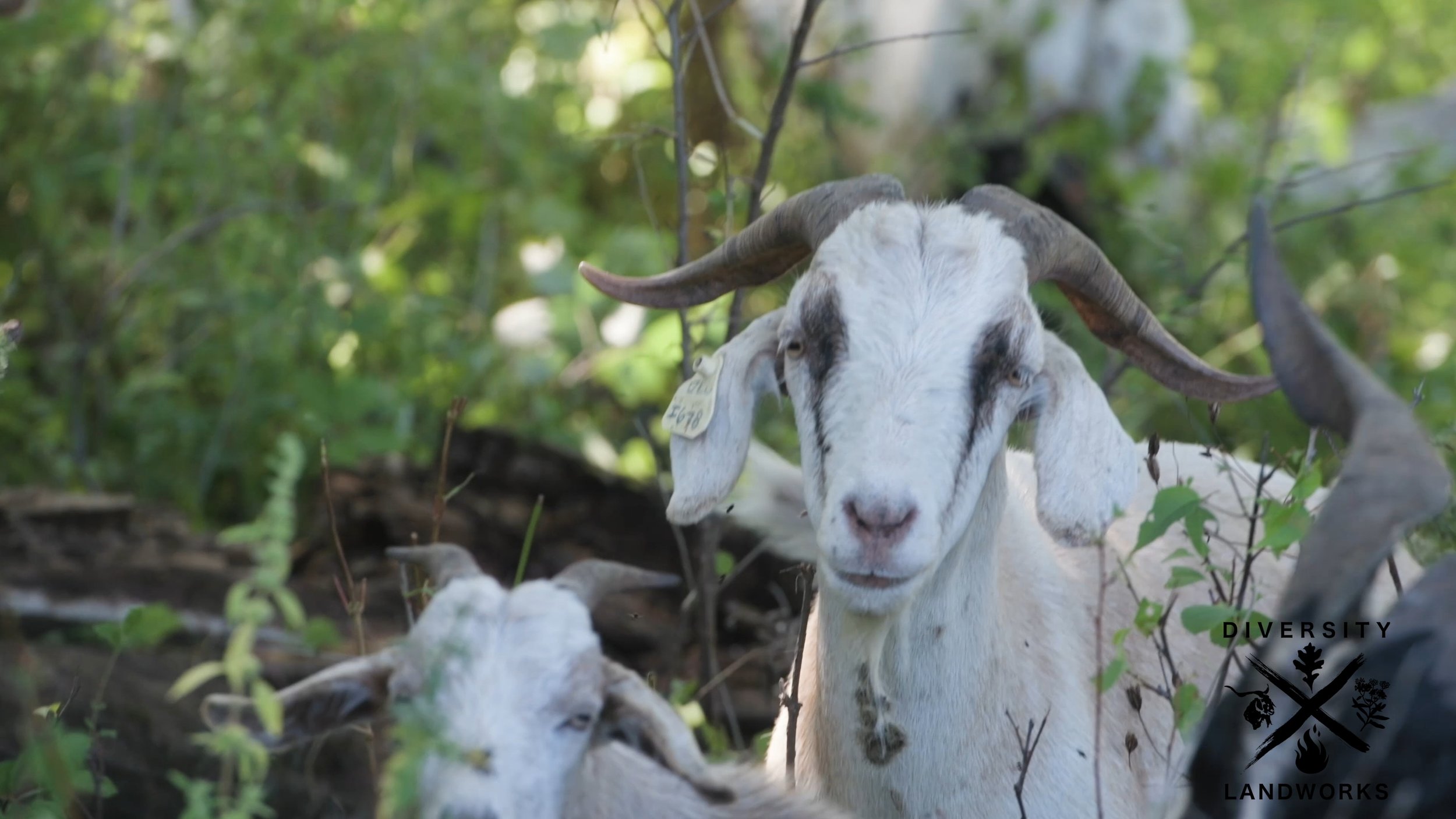
Our prescribed goat herds can be deployed anywhere from a single urban acre in a Minneapolis neighborhood to a multi-hundred-acre restoration project in a regional park. Our animals are specially selected for temperament and targeted grazing behavior—they stay where they’re supposed to be, focus on the invasives you want gone, and create minimal disturbance to surrounding areas.
Here’s what sets our Twin Cities work apart:
Scale flexibility: Whether you have a quarter-acre backyard woodlot or a 300-acre park, we can size our herd and management plan appropriately.
Multi-year planning: Buckthorn doesn’t disappear after one season, and neither do we. We develop long-term management plans that track progress, adjust tactics, and build toward lasting results.
Chemical-free by default: In urban environments where children play, dogs roam, and waterways are close, our biological approach removes the herbicide question entirely.
Integrated services: When grazing alone isn’t enough—especially in areas of dense, mature buckthorn—we bring in forestry mowing or mechanical clearing to break the initial canopy, then follow up with targeted grazing.
Diversity Landworks in Twin Cities Media



Check out stories in these outlets and more on our In the News page.
Trusted by Twin Cities Land Managers
Diversity Landworks has earned the trust of some of the Twin Cities’ most respected public land management organizations. We have partnered with Minneapolis Parks and Recreation, Great River Greening, and other metro-area conservation organizations on restoration projects that demonstrate what prescribed grazing can achieve in an urban context.
These partnerships reflect something we’re proud of: our work holds up to professional scrutiny. Public land managers with rigorous standards and public accountability have evaluated our methods and chosen to work with us—and to continue working with us as their landscapes respond.
For private Twin Cities landowners, this track record means you can hire us with confidence. We bring the same ecological expertise and professional standards to your backyard, your business campus, or your conservation easement that we bring to regional park projects.
Contact Us
Ready to begin a conversation? Provide some basic information by filling out a short form, or if you prefer, you can contact us by email or phone. Please allow up to one business day for us to respond.
507-556-4420
See Us in the Field
Watch Kyle and Tim in the field, where they explain how their process mimics nature’s age-old methods for maintaining ecological balance.