Natural Buckthorn and Invasive Species Control in Western Wisconsin
The scourge of buckthorn in Western Wisconsin
From the bluffs above the St. Croix River to the coulees of the Driftless interior, western Wisconsin’s landscape is one of the most scenically dramatic and ecologically significant in the Midwest. The region’s unglaciated terrain created a mosaic of oak woodlands, prairies, savannas, and spring-fed streams that supports extraordinary native diversity.
Buckthorn has become the most pervasive threat to that diversity. Common buckthorn and glossy buckthorn have colonized woodlands from the St. Croix valley south through Pierce, Polk, St. Croix, and Dunn counties, steadily replacing the native understory that once supported spring wildflowers, wood thrushes, and resident wildlife populations. Honeysuckle, garlic mustard, and wild parsnip compound the challenge in many areas.
For western Wisconsin landowners who want to protect and restore their land without defaulting to herbicide, the options have historically been limited. That’s where Diversity Landworks comes in.
Proven Results in Wisconsin’s River Bluff Country
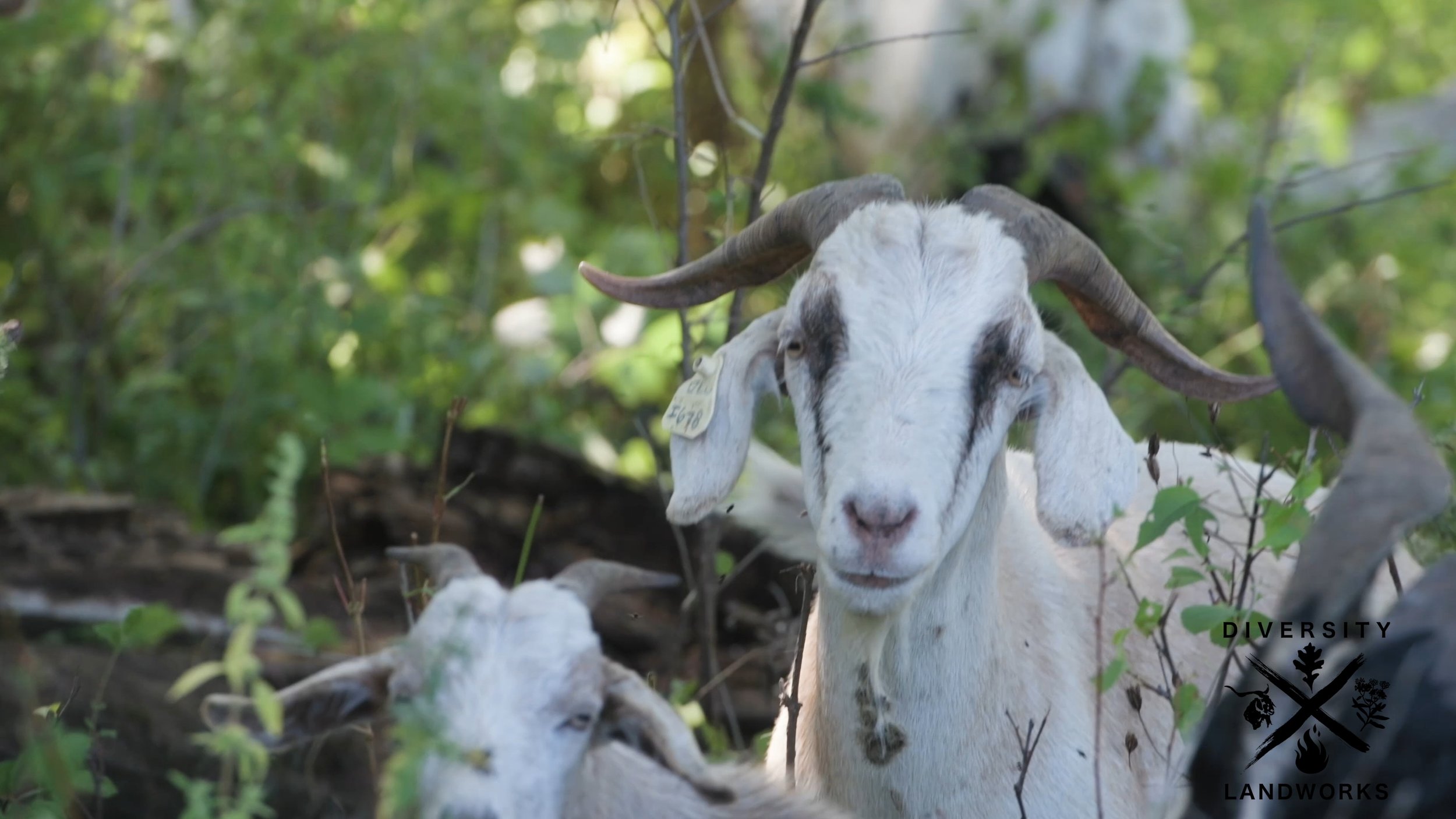
Diversity Landworks has been working in western Wisconsin for years, and some of our most successful restoration projects are right here in the St. Croix River valley. On the bluffs above Osceola, we’ve been working with a committed property owner for multiple seasons—grazing 50 to 100 acres per year with a targeted herd of about 35 animals. The results speak for themselves: every season, the brush grows thinner, the goats cover more ground, and native sedges and wildflowers are returning to the woods.
This is the trajectory we aim for on every Wisconsin project: measurable, compounding progress toward a woodland or savanna that looks and functions the way it’s supposed to.
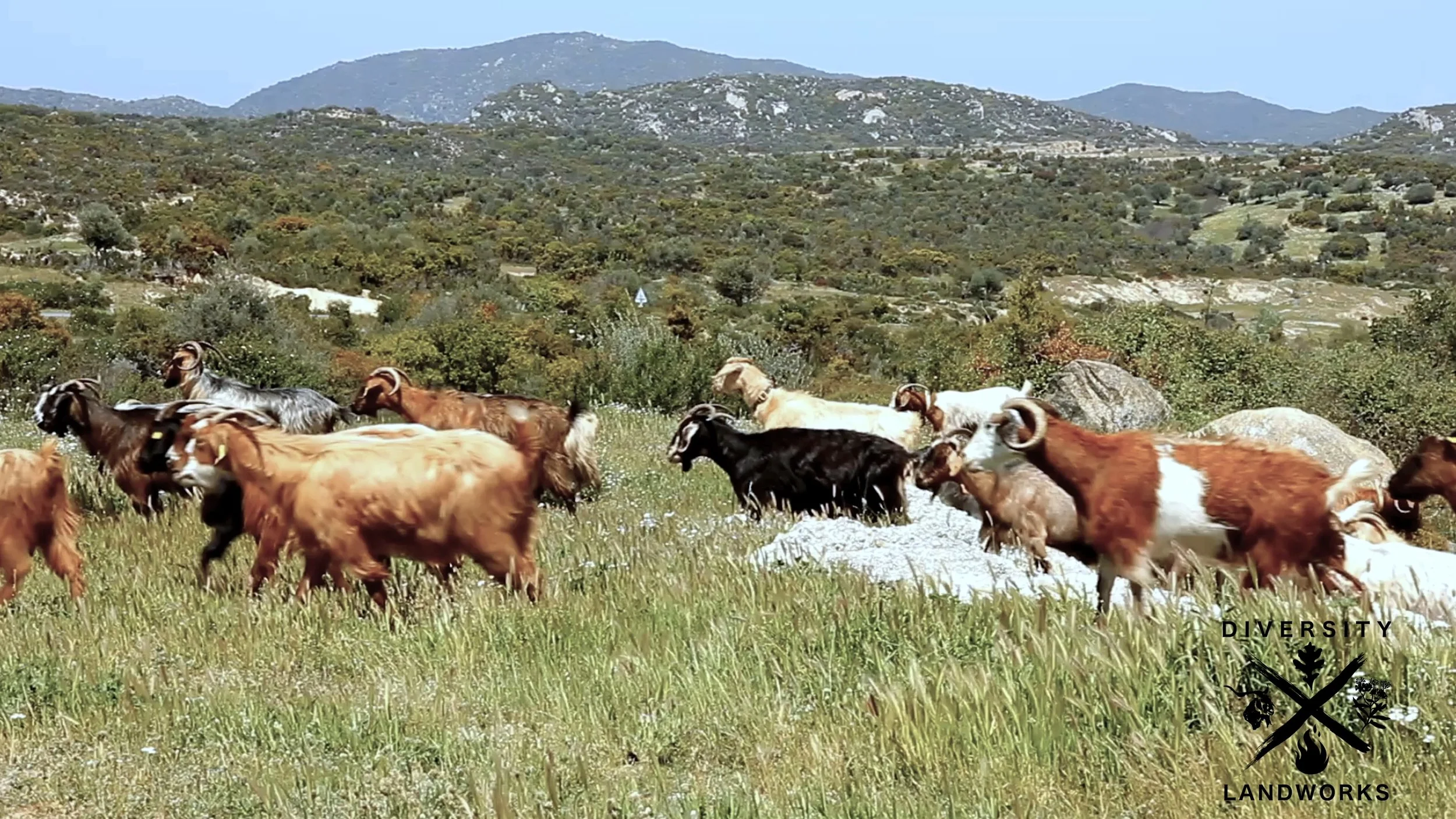
Prescribed goat grazing: Our animals are specially bred and selected for targeted grazing work. They thrive on steep terrain, love to eat buckthorn and other invasive shrubs, and methodically deplete invasive root reserves over multiple seasons—eliminating them rather than just setting them back. Learn more about prescribed goat grazing.
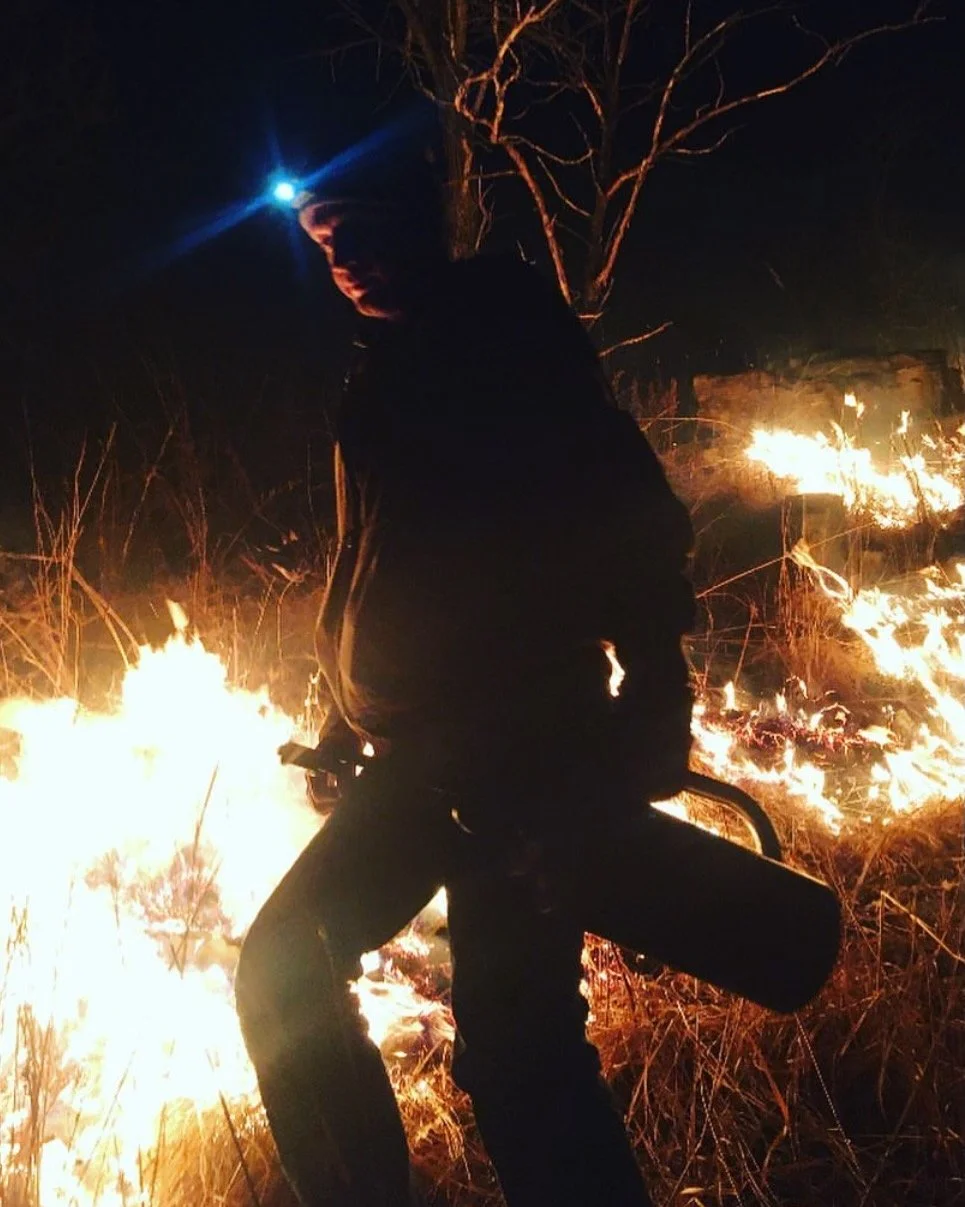
Prescribed fire: Fire is one of the most powerful restoration tools for the Driftless’s oak savannas and prairies. We conduct controlled burns when ecological conditions are right, clearing accumulated brush and stimulating native plant regeneration. Learn more about our prescribed fire practices.
Forestry mowing and mechanical clearing: When brush density is too high for goats alone, our heavy equipment can open up the canopy fast, creating conditions for accelerated grazing follow-through. Learn more about forestry mowing and mechanical clearing.
Ecological assessment and long-term planning: We don’t show up with animals and hope for the best. Every project begins with a thorough site assessment, and we develop a custom multi-year management plan tailored to your land’s specific conditions and goals. Learn more about ecological assessment and long-term planning.
Projects that combine these methods consistently achieve the fastest and most lasting results. Goats alone make a huge difference; goats followed by a well-timed burn can transform a woodland in just a few seasons.
Short video about Diversity Landworks at The Acreage in Osceola in western Wisconsin.
Case Study: The Acreage, Osceola, Wisconsin
Perched on the bluffs above the St. Croix River, The Acreage in Osceola is the kind of property where the owners care deeply about doing right by the land — which is why they chose biological brush control over chemicals. Diversity Landworks has brought a herd of about 35 goats to the site for three consecutive seasons, grazing between 50 and 100 acres per year as the brush gradually thins and the native understory begins to reassert itself. The results have been quietly remarkable: native sedges and wildflowers are returning to the woodland floor, and each season the goats cover more ground with less resistance. "Every year the brush gets thinner, the goats cover more ground, and the land gets healthier," Kyle Johnson said of the project. It's a good example of how prescribed grazing works on nature's timeline — not a dramatic overnight transformation, but a steady, compounding return to ecological health.
Contact Us
Ready to begin a conversation? Provide some basic information by filling out a short form, or if you prefer, you can contact us by email or phone. Please allow up to one business day for us to respond.
507-556-4420
Serving Southeast Minnesota’s Public and Private Landowners
We work with private landowners, land trusts, conservation organizations, and public agencies across western Wisconsin. If you own land in the St. Croix valley, the Driftless interior, or the Mississippi River bluff country, and you want to know what’s possible for your property, we’d love to hear from you.
Serving Pierce, Polk, St. Croix, Dunn, Pepin, and Buffalo counties, as well as the greater western Wisconsin Driftless region.
a few of the cities we serve…
Madison
Eau Claire
La Crosse
Wisconsin Dells
Baraboo
Portage
Tomah
Sparta
Black River Falls
Osseo
Hudson
River Falls
New Richmond
Osceola
Prescott
Ellsworth
Baldwin
Menomonie
See Us in the Field
Watch Kyle and Tim in the field, where they explain how their process mimics nature’s age-old methods for maintaining ecological balance.